
There are no rules in makeup and I love that. Each one can express how and what they want to look and feel. Whoever says: “that color only goes with that color”, or “that’s too much glitter for this time of day” is someone who decides to opine on a subjective matter. My blog is not about telling you what to wear, or how to wear, or what to buy, but showing what I’ve found that works great for me and it worth spending money on.
Disclaimer: This post may contain affiliate links which means I may receive a commission for purchases made through links. I will only recommend products that I have personally used! Learn more on my Privacy Policy page.
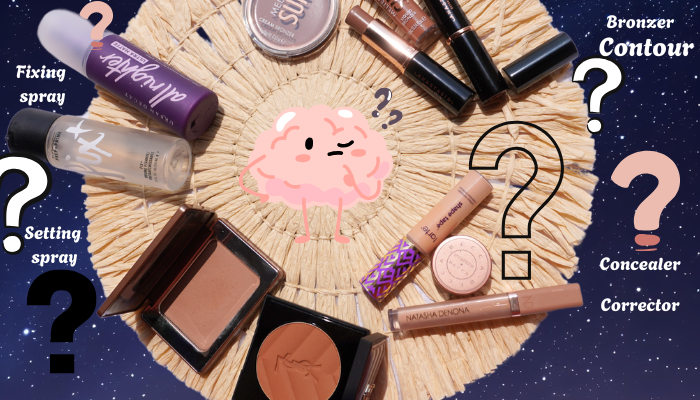
However, there are some confusions in the makeup world that need clarification. Otherwise, you might end up buying and using the wrong product or even something that’s not flattering because you didn’t understand for what it’s good for. So let’s dive in. I bet some of these products you were using for a different purpose.
Fixing spray vs. setting spray
Let’s start with the brands themselves that “feed” this confusion directly to their customers by branding their product with the wrong description. You’ll hear a spray is a setting spray when it actually doesn’t do what it’s supposed to as a setting spray. Why do they do this? Because the descriptive term resonates more with the effect in the buyer’s eye. You might think: “setting” sets- final step and “fixing” fixes, can be used before the end of the makeup. NO, it’s actually the other way round, and I’ll show you a simple way to make the difference to benefit from the full function of each product. I’ve found that most fixing sprays, meant to seal the makeup at the end, are marketed as SETTING SPRAYS for the POWER OF THE WORD.
These two sprays are used for different effects and with purposes and can be used together; they don’t cancel each other out as long as you use them in the right order.
The fixing spray (SHOP HERE) locks your makeup in place for long wear, so its main purpose is longevity, keeping your “artwork” protected from heat and humidity. It’s like a sealer or hairspray for the face and the L’Oreal one(shop here) feels just like one. Most sprays that appear as “setting” are actually “fixing”. To know you’re buying a fixing spray to lock your makeup, look for terms like “smudge-proof”, “transfer-resistant”, “controls shine”, and “waterproof”. Usually, it contains alcohol as an ingredient, so it’s not suitable for sensitive skin.
The setting spray (SHOP HERE) blends and hydrates your makeup for a smooth finish. it can be used throughout the day to refresh your makeup and between layers of cream/liquid makeup to blend them together for a seamless, natural look.
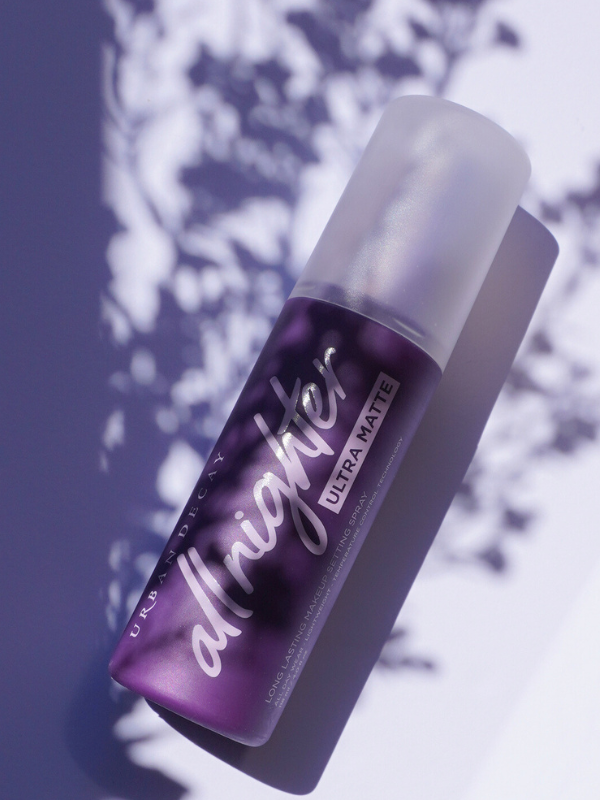
Fixing sprays
- Used for prolonging the makeup wear time.
- In the description, you’ll see terms like: smudge-proof, waterproof, and controls shine.
- Used at the end to seal the makeup
- Usually contain alcohol.
- Skindinavia (which actually also makes the Urban Decay All nighter spray-bet you didn’t know) makes the best sprays for lasting event makeup, like bridal makeup, according to reviews and my personal experience
- Other highly-rated fixing sprays: L’Oreal Infallible 3 seconds, One size.
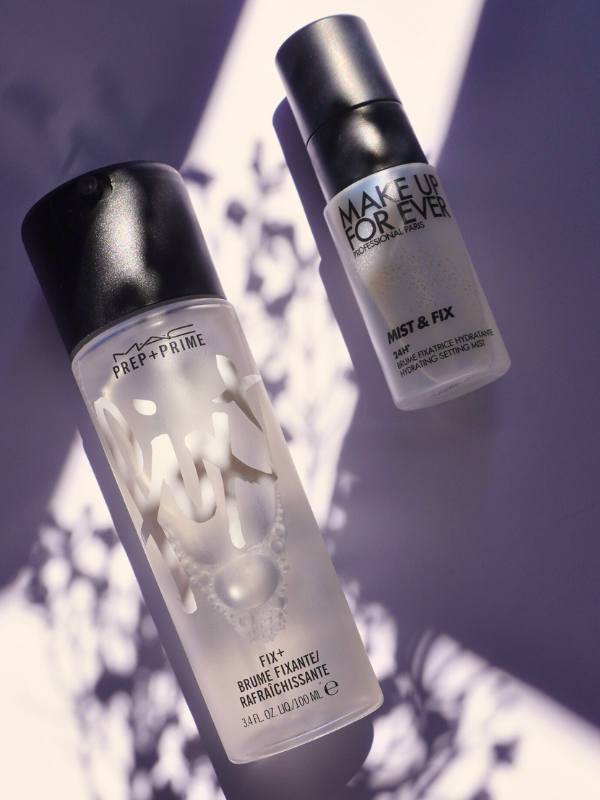
Setting sprays
- Used between layers of makeup
- Adds moisture and hydration to the skin
- Can be used throughout the day to refresh the makeup
- Contain ingredients like glycerin or dimethicone.
- Perfect for everyday use to keep your makeup fresh and put-together for longer time.
- There are different types with various effects, like glowy or matte.
Contouring vs. Bronzing
While confusing setting sprays with fixing sprays is totally understandable, given that even producers disorient the public, the next one is easy to follow and understand. Shading and illuminating one’s features are necessary to bring some life back to the complexion once we’ve evened it out with foundation/concealer or even on a natural face if we want to look fresh, rested or chiseled. But not once have I seen someone mention contouring/shaping the face and then apply a very warm-toned bronzy brown color, naming it a CONTOUR.
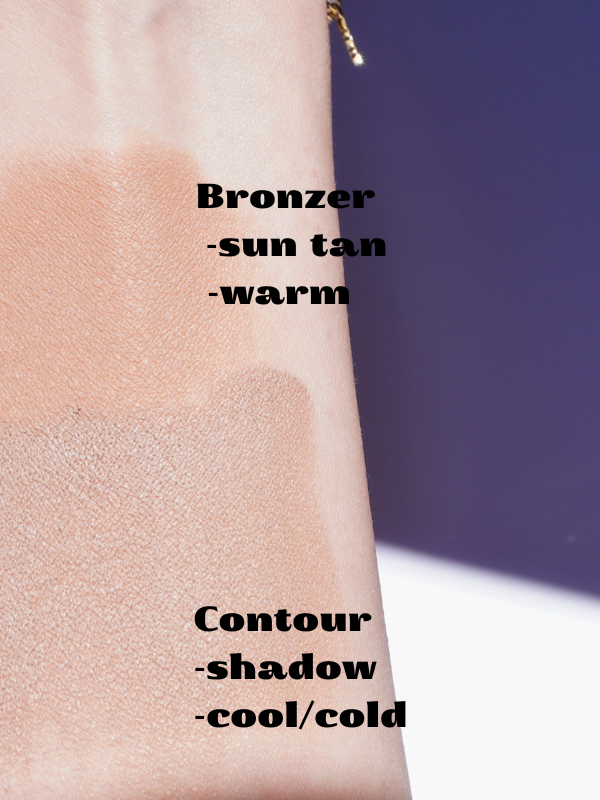
Contouring(shop products here) refers to shaping the face features. Nowadays, beauty standards favor a more slim, oval face, slightly elongated, with visible cheekbones and lifted features. Each person’s face is unique and beautiful on its own, and with contour, we try to bring the best in us, gravitating towards today’s beauty standards in proportion. Heavy contour won’t make you look like a different person; it’ll look artificial and stained in real life, and even muddy. It’s perfect for pictures, when it’s discreet, mimicking shadows, making the nose slimmer, giving the illusion of a slender face, higher cheekbones, hiding a double chin or sagging cheeks. However, it’ll do you a disfavor if it’s in an exaggerated amount. Giving that it mimics a shadow, it must be in a cool/cold tone for very light/light/light-medium skin tones and neutral, slightly warm for medium to dark skin tones. I have a complete article with review and swatches of Anastasia Beverly Hills Contour sticks, which were the only ones I’ve found to be real cool-toned for fair skin; you can READ THE BLOG POST HERE.
Bronzing (bronzing products shop here), just as the name suggests, refers to making your skin look like it stayed in the sun, got tanned, but actually didn’t. Bronze means warm tones on the highest points of the face, where the sun would actually hit. The bronzed areas are on top of contoured areas, and the first ones are warm-toned while the shadows are more cool. I often hear the word “contour” and then see a warm brown shade being applied exactly where you want to emphasize your features. I don’t consider contour necessary on a daily basis, only for pictures, but my favorite part of makeup nowadays is bronzing. Just one swipe of your favorite cream/powder product can bring life back into your skin, give you a fresh, laid-back, effortless look, making you feel a million dollars with the minimal effort.
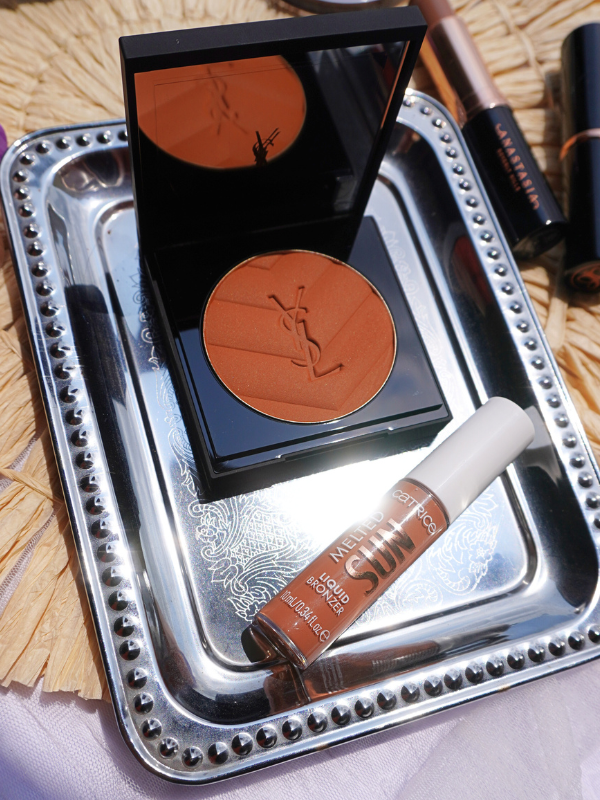
Bronzer
- it’s warm-toned, as it adds warmth and color to the face
- it’s used on the places where sun would natural hit: temples, nose, and top of the cheeks. It enhances a tan, basically
- it can be matte or have shimmer
- it comes in all kind of formulations: cream, liquid, gel, powder, and can be used for both the face and body
- avoid by all means the orangey-toned bronzers, as they can look artificial
- in enhances features
Contour
- mimics shadows, and by this, it helps with sculpting the face features
- should mostly be cool-toned as shadows have grey tones, but for medium/medium-dark/dark complexions a slightly warm undertone is acceptable
- it’s placed underneath volumes to mimic shadows: under the cheekbones, under the jaw and according to the face features, wherever corrections are needed.
- it corrects face features and should be used with care, as you don’t want visible lines.
Corrector vs. Concealer
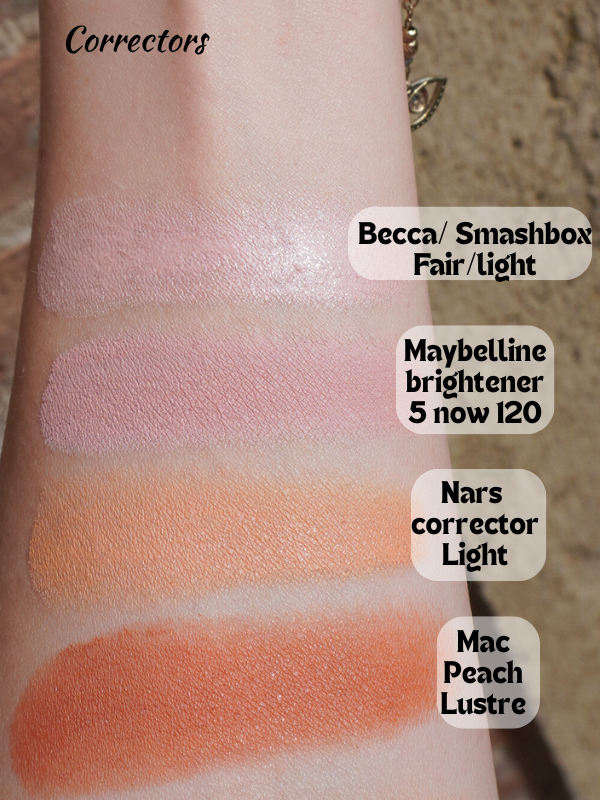
I’ll start with the more complicated product to use, the correctors (click here to shop correctors); when to use them and what their purpose is. Correctors are makeup products used to mask skin concerns like undereye circles, hyperpigmentation, or redness. They work by neutralizing the area where they’re applied, and the math behind it is the color theory. Complementary colors (opposite on the color wheel) emphasize each other when they’re next to each other, while putting one on top of the other neutralizes them. For example, blue undertone undereye circles(for which I use correctors the most) are canceled out with orange/salmon tones, while blemishes/redness are neutralized by green tones. The corrector is placed directly on the skin that needs a color change, right after skincare, with the main purpose to neutralize the problem area. I feel like with correctors, one must have some makeup knowledge as it is easy to overdo it and emphasize the skin problems more. I can say that for me, it was even difficult to play with the color wheel; in the end, I just memorized it.
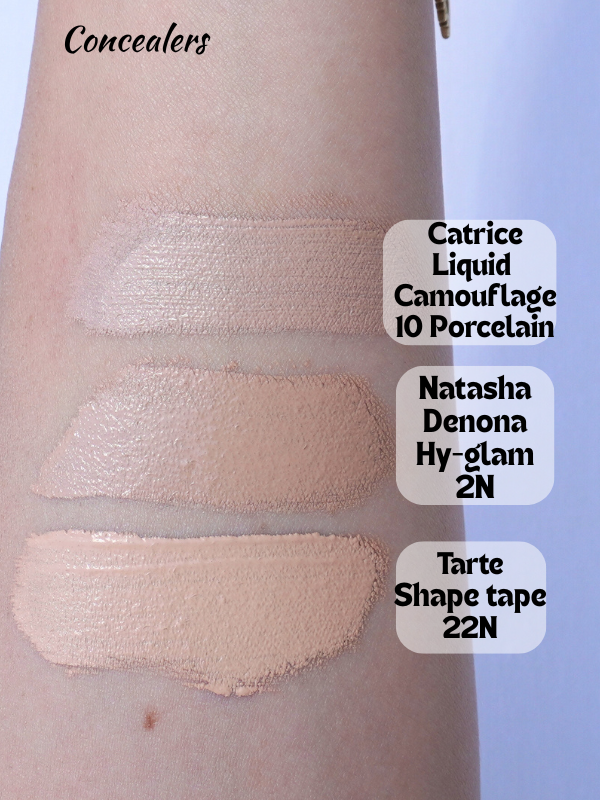
Concealers (click here to shop) are more popular makeup products, as most of us use them every day to target little imperfections like undereye circles, hyperpigmentation, and bring light to specific areas of the face. Most of them are thicker and more pigmented than foundation to help cover imperfections. The pigments in concealers are less intense than those used for correctors. Like highlighters, concealers can be used on the center part of the face(forehead, nose, chin). They come in yellow, rosy and neutral undertones, just like foundations, and the rosy/salmon/peachy/red/yellow pigment contained in them can be used for a light color correction, but not when there’s a serious issue. It’s a product for everyday use, and most of use will use one and even skip foundation.
Correctors
- they balance skin tones by neutralizing redness and dark circles
- they have pigments you can really notice, in order to neutralize complementary colors; they come in pink, green, lavender, blue, orange shades
- should only be applied locally
- should be applied sheer, gradually, to appear natural and seamless
- unless you struggle with real skin issues, it’s not an everyday must
Concealers
- they balance skin tones by neutralizing redness, dark circles, but contain less colorful pigments than correctors
- they come in yellow, pink and neutral undertones
- they meant for everyday wear, and are user-friendly, they can even replace foundation use.
- they have different composition for different skin types: oily, dry.
- they can be used on its own or on top of correctors
Setting powder vs. Finishing powder
I confess here that I might own too many powders. Most of them are setting powders, and once I understood the difference between them, I started adding finishing powders as well. Setting powders are the ones we would likely use on an everyday basis, if you are the type of person who likes powders at all. They are a makeup product designed to help us lock in foundation, concealer, and all the liquid/cream products that were added on top of the foundation or even on bare skin. However, many of them, iconic ones even, are being reformulated because of talc, leaving companies with no choice due to strict regulations. So many of our trusty setting powders no longer have the same qualities they had in the past
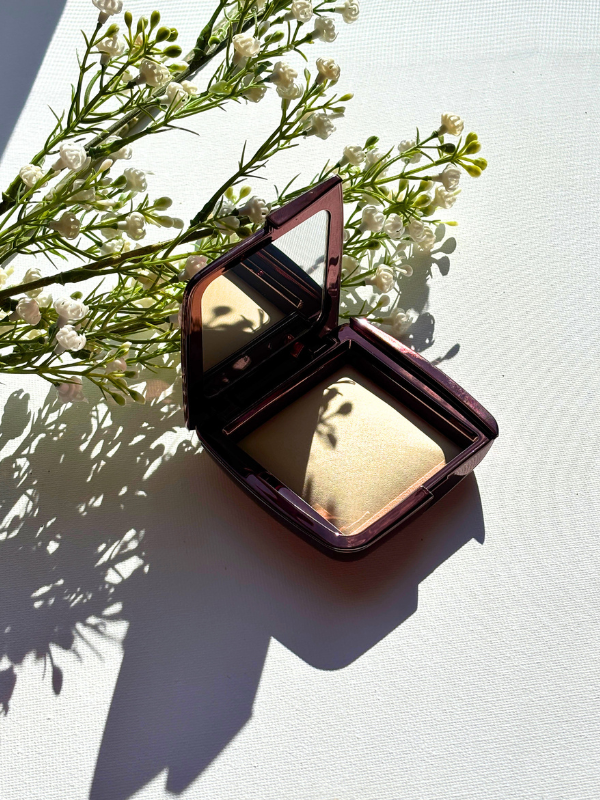
Finishing powders serve the same purpose as the setting ones do. That is, controlling shine and giving the skin a smooth, blurred finish. So, where is the difference? Finishing powders are those that give the skin that filter effect; if not in real life, then for sure in videos and pictures because of the reflecting ingredient technology they carry.

Setting powders
- absorb excess oil from the skin
- extend the wear time of makeup
- are heavier than finishing powders, as their main purpose is oil absorption
- come in either a translucent shade- which is transparent and has no pigment, or colored, skin-toned shades
Finishing powders
- they absorb excess oil from the skin, but it’s not their top quality. I actually prefer to apply them on top of a setting powder.
- extend the wear time of makeup
- they are better used for touch-ups, as they don’t tend to cake
- they tend to add a distinct, luminous finish to the skin, which makes you look airbrushed in pictures. They contain micro-sized luminous particles for this purpose. They add a sheen to the skin or come in color-correcting shades, like purple, pink, pearl, rose, or even green.
Serum vs. Ampoule
Starting to use serums in my skincare has dramatically improved my skin’s appearance (shop serums here) didn’t trust the product when it first started becoming popular. It’s not enough to be a moisturizer, it’s too lightweight. It felt like you were being sold water, but it is far from that. With a special, modern technology, the ingredients of the serum can be shrunk down to tiny dimensions, making it easier for the skin to absorb them and for the cells to benefit from them. Serums are skincare products that contain one or two active ingredients in a concentrated form targeted toward a specific need. So, for brightness, there are serums with vitamin C, for fine lines, serums with retinol, for plumping and hydrating the skin, serums with with hyaluronic acid, and so on. You can read more about serums as an essential step in your skincare routine right HERE ON MY BLOG POST. The idea is that according to your skin’s needs, you can switch between serums to target that specific issue.
Ampoules, on the other hand, are serums on steroids. Honestly. Their name even comes from the pharmaceutical mini-glass vials that some of them even still come in, although K-beauty already puts them out in slightly bigger bottles, but usually not more than 30 to 50 ml. It is very, very concentrated to the level where you only need a few drops for a single use. The ingredients are supposedly better stabilized for better and faster results. It might be a skincare gimmick, but I can say I only tried the Skin1004 Madagascar Centella one(find here to shop) for soothing in my winter skin era and I really loved it. By K-beauty standards, the ampoule has the highest potency, higher than toners, essences, and serums, and it is to be sealed with a moisturizer or emulsion. I personally use an ampoule instead of a serum in my skincare routine; I am not at that high-maintenance level yet where I would layer both. I would use them when my skin is really in need: in the dry winter, during the change of seasons, and less in the summer, but that’s just me.

Serums
- It’s a skincare product that contains one or two active ingredients in a concentrated form.
- Their order of application is after the toner and before the moisturizer.
- according to the skin issue, there can be:
- Hydrating ones, like serums with hyaluronic acid, glycerin, and panthenol. For these, I recommend spraying thermal water to help the serum lock in the moisture.
- Brightening ones, like serums with vitamin C and niacinamide. They help with dark spots and give radiance.
- Anti-aging ones, like serums with retinol, peptides, and antioxidants for firming the skin and bringing back elasticity.
- Soothing ones like serums with centella (very much in fashion right now), and panthenol for calming inflammation and restoring the skin barrier.
- And many more, but these are the most popular.
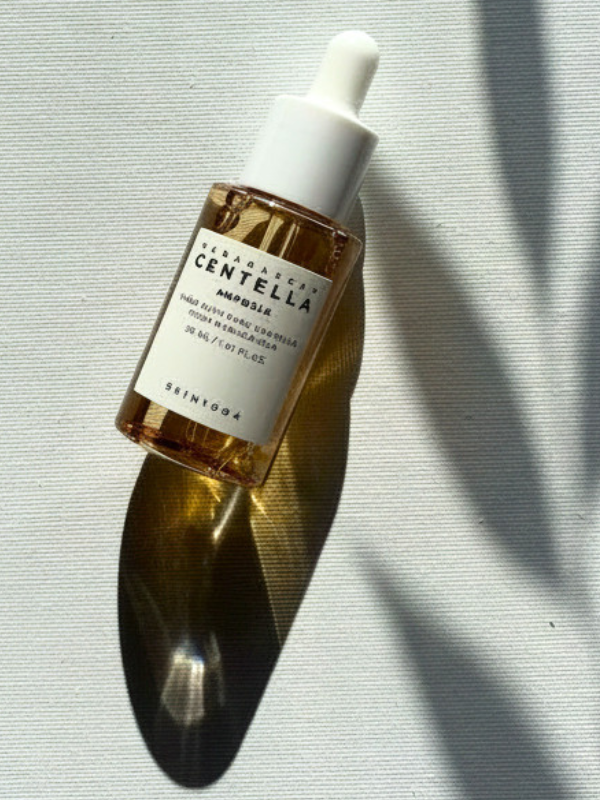
Ampoules
- A very concentrated treatment that targets a specific issue
- More potent than toners, essences, or serums
- Because they are very concentrated and target specific issue with more potency, the treatment lasts for a shorter period of time, so you don’t need to use it every day for the rest of your life.
- You can see real results faster than with serums
- They come in smaller containers, most of the time with a hygienic dispenser instead of the classic glass vials.
I’d like to hear from you if this information was useful and if it was easy to understand the different concepts and the different uses of makeup products that look similar, but have totally different purposes.
